As an eBay Partner Network Affiliate, we may earn a commission at no additional cost to you.

Sockets & Ratchets -- Professional Guide

📅 Updated March 29, 2026 🔗 BuyUsed.Tools Blog

Hand tools are the foundation of every trade. While power tools handle volume work, hand tools provide the precision, control, and access that no power tool can match. Quality hand tools from professional brands are engineered to last an entire career.

This guide covers Sockets & Ratchets across 6 tool types. Each section addresses what the tool does, how it\'s used across different applications, and what to look for when evaluating quality.

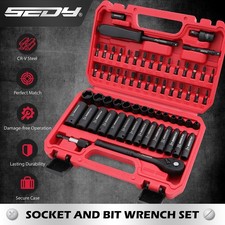
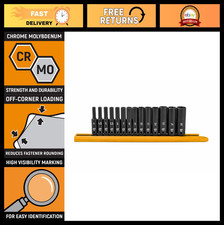
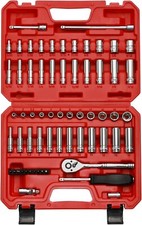
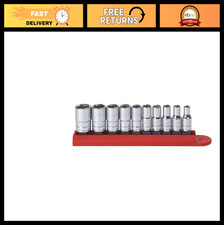
This category covers 1/4" Drive Sets, 3/8" Drive Sets, 1/2" Drive Sets, Impact Socket Sets, Deep Socket Sets, and 1 more tool types. Use the subcategory links below to go deeper on any specific tool, or browse the current listings above for a broad view of what\'s available.

Loading live listings…
Via eBay • Live results

Loading current listings…

Buying Guide: What to Know Before You Buy

How Sockets & Ratchets Are Used

The single most-used tool in automotive work. 3/8" drive handles the majority of engine and suspension work; 1/4" drive is preferred for tight quarters and smaller fasteners; 1/2" drive is reserved for high-torque applications like lug nuts and large suspension bolts.

Leading Brands

Snap-on ratchets are the industry gold standard -- their fine-tooth mechanisms (72 teeth on standard models) require minimal swing arc in tight spaces. Matco and Mac Tools are close seconds. GearWrench 90-tooth ratchets offer exceptional value. Avoid ratchets with fewer than 36 teeth for professional work.

What to Inspect

Test the ratchet mechanism thoroughly -- it should click crisply with no slop or skipping under load. Rebuild kits are available for most professional ratchets, so a worn Snap-on is still worth buying. Check the drive square for wear or rounding.

Frequently Asked Questions

What is a Sockets & Ratchets and what is it used for?
A ratchet is a reversible socket-driving mechanism that allows continuous turning without repositioning the tool. The internal pawl-and-tooth mechanism engages in one direction and freewheels in the other. Drive sizes -- 1/4", 3/8", and 1/2" -- correspond to the socket sets they drive. The single most-used tool in automotive work. 3/8" drive handles the majority of engine and suspension work; 1/4" drive is preferred for tight quarters and smaller fasteners; 1/2" drive is reserved for high-torque applications like lug nuts and large suspension bolts.
What brands make the best Sockets & Ratchets?
Snap-on ratchets are the industry gold standard -- their fine-tooth mechanisms (72 teeth on standard models) require minimal swing arc in tight spaces. Matco and Mac Tools are close seconds. GearWrench 90-tooth ratchets offer exceptional value. Avoid ratchets with fewer than 36 teeth for professional work.
What should I inspect when evaluating a used Sockets & Ratchets?
Test the ratchet mechanism thoroughly -- it should click crisply with no slop or skipping under load. Rebuild kits are available for most professional ratchets, so a worn Snap-on is still worth buying. Check the drive square for wear or rounding.
What is the difference between professional and consumer Sockets & Ratchets?
Professional-grade Sockets & Ratchets are built to different specifications than consumer versions -- heavier steel, tighter tolerances, more robust mechanisms, and longer-lasting surface treatments. The practical difference shows up in accuracy over time, performance under sustained use, and longevity. A professional tool used daily for a career represents a much better value than replacing consumer versions every few years.
How are Sockets & Ratchets used differently across industries?
The single most-used tool in automotive work. 3/8" drive handles the majority of engine and suspension work; 1/4" drive is preferred for tight quarters and smaller fasteners; 1/2" drive is reserved for high-torque applications like lug nuts and large suspension bolts. Different industries also have different standards for tool condition and calibration -- a machinist\'s requirements for a measuring tool differ from a carpenter\'s, even when using the same instrument.
As an eBay Partner Network Affiliate, we may earn a commission at no additional cost to you.