Cordless Drills & Drivers -- Professional Guide
Modern cordless power tools have transformed the trades, offering professional performance without the constraints of cords and generators. Platform compatibility -- the ability to share batteries across tools -- is one of the most important considerations in cordless tool selection.
This guide covers Cordless Drills & Drivers across 4 tool types. Each section addresses what the tool does, how it\'s used across different applications, and what to look for when evaluating quality.
This category covers Drill/Driver Combos, Impact Drivers, Hammer Drills, Right Angle Drills, and 0 more tool types. Use the subcategory links below to go deeper on any specific tool, or browse the current listings above for a broad view of what\'s available.
Buying Guide: What to Know Before You Buy
How Cordless Drills & Drivers Are Used
The single most-used cordless tool on any job site or in any shop. Used for drilling holes and driving fasteners in wood, metal, plastic, and (with hammer mode) masonry. The clutch makes it indispensable for cabinetry, deck building, and any application where consistent screw depth matters.
Leading Brands
Milwaukee M18, DeWalt 20V MAX, and Makita 18V LXT are the three dominant professional platforms. Platform compatibility -- the ability to share batteries across tools -- is a major purchasing consideration. Festool and Hilti serve premium niches. Metabo HPT (formerly Hitachi) offers excellent performance at competitive prices.
What to Inspect
Test the clutch through its range -- it should disengage consistently at each setting. Check the chuck for wobble and jaw tightness. The most important test on cordless tools: verify the battery platform, ensure included batteries hold a charge, and confirm replacement batteries are still manufactured.
Frequently Asked Questions
What is a Cordless Drills & Drivers and what is it used for?
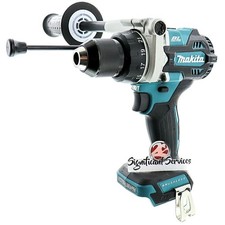
A cordless drill/driver combines a variable-speed trigger, reversible rotation, and an adjustable clutch into a battery-powered tool. The clutch disengages the drive when a set torque is reached, preventing overdriving screws and cam-out damage. Hammer drills add a percussive action for drilling into masonry. The single most-used cordless tool on any job site or in any shop. Used for drilling holes and driving fasteners in wood, metal, plastic, and (with hammer mode) masonry. The clutch makes it indispensable for cabinetry, deck building, and any application where consistent screw depth matters.
What brands make the best Cordless Drills & Drivers?
Milwaukee M18, DeWalt 20V MAX, and Makita 18V LXT are the three dominant professional platforms. Platform compatibility -- the ability to share batteries across tools -- is a major purchasing consideration. Festool and Hilti serve premium niches. Metabo HPT (formerly Hitachi) offers excellent performance at competitive prices.
What should I inspect when evaluating a used Cordless Drills & Drivers?
Test the clutch through its range -- it should disengage consistently at each setting. Check the chuck for wobble and jaw tightness. The most important test on cordless tools: verify the battery platform, ensure included batteries hold a charge, and confirm replacement batteries are still manufactured.
What is the difference between professional and consumer Cordless Drills & Drivers?
Professional-grade Cordless Drills & Drivers are built to different specifications than consumer versions -- heavier steel, tighter tolerances, more robust mechanisms, and longer-lasting surface treatments. The practical difference shows up in accuracy over time, performance under sustained use, and longevity. A professional tool used daily for a career represents a much better value than replacing consumer versions every few years.
How are Cordless Drills & Drivers used differently across industries?
The single most-used cordless tool on any job site or in any shop. Used for drilling holes and driving fasteners in wood, metal, plastic, and (with hammer mode) masonry. The clutch makes it indispensable for cabinetry, deck building, and any application where consistent screw depth matters. Different industries also have different standards for tool condition and calibration -- a machinist\'s requirements for a measuring tool differ from a carpenter\'s, even when using the same instrument.
As an eBay Partner Network Affiliate, we may earn a commission at no additional cost to you.